
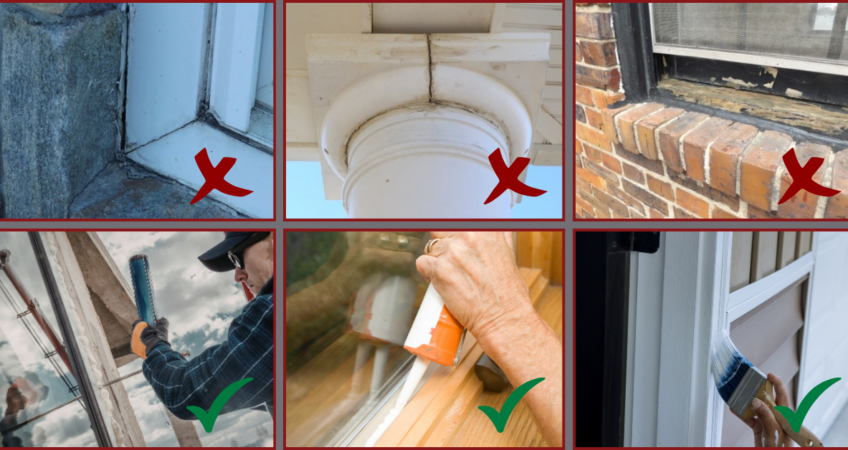
A building is only as strong as its primary defense: The Building Envelope. Often referred to as the “skin” of a facility, the envelope is what stands between your investment and the relentless impact of water, wind, heat, and cold.
However, even the toughest defenses wear down. Normal aging, UV exposure, and weathering eventually break down materials, allowing moisture to penetrate. Left unchecked, a small crack today becomes a structural nightmare tomorrow.
The Best Defense: Annual Inspections
The most cost-effective way to manage your facility is a combination of regular inspections and proactive repair. At a minimum, inspect building envelope components at least once each year and immediately following extreme weather events.
What should you look for?
- Peeling or bubbling paint
- Efflorescence (white, powdery salt deposits on masonry)
- Staining or mold growth
- Evidence of moisture intrusion inside the building
Your Prevention Toolkit: Paint, Caulk, and Sealants
Once damage is identified, it must be corrected. To prevent its return, you need to understand the three main tools of envelope maintenance:
- Paint: The First Line of Defense
Paint isn’t just about aesthetics; it’s a barrier against UV rays and water.
- Life Expectancy: 5–15 years.
- Pro Tip: For exterior applications, 100% acrylic latex or elastomeric paints are the gold standard. Remember, higher-quality paint almost always translates to a longer service life.
- Caulk: The Interior & Wood Specialist
Most caulks are acrylic or latex-based. They are excellent for filling small gaps and are easy to work with.
- Pros: Low cost, paintable, and easy water cleanup.
- Cons: Prone to shrinking/cracking; not ideal for joints that move or stay wet.
- Best For: Wood surfaces and static joints.
- Sealants: The Heavy-Duty Protector
Unlike caulk, sealants are typically silicone-based, offering superior elasticity and water resistance.
- Pros: Lasts 15–20 years; does not shrink; handles joint movement beautifully.
- Cons: Higher cost; it requires solvents for cleanup; it cannot be painted.
- Best For: Glass, metal, and areas subject to high moisture or movement.
Why Strategy Matters
Applying the wrong material, like putting caulk in a high-movement expansion joint or using sealant where you intended to paint, can lead to premature failure and wasted budget. Proper surface preparation, including the total removal of old material and debris, is the only way to ensure your repairs hold.
Secure Your Property’s Future
Maintaining the building envelope is a marathon, not a sprint. Knowing when these components will fail is the key to accurate financial planning and avoiding special assessments. Is your association’s reserve fund prepared for the next phase of envelope maintenance? Don’t leave your building’s defense to chance.
Request a Proposal Today and let our experts provide the clarity and data you need to protect one of your community’s most valuable assets.