
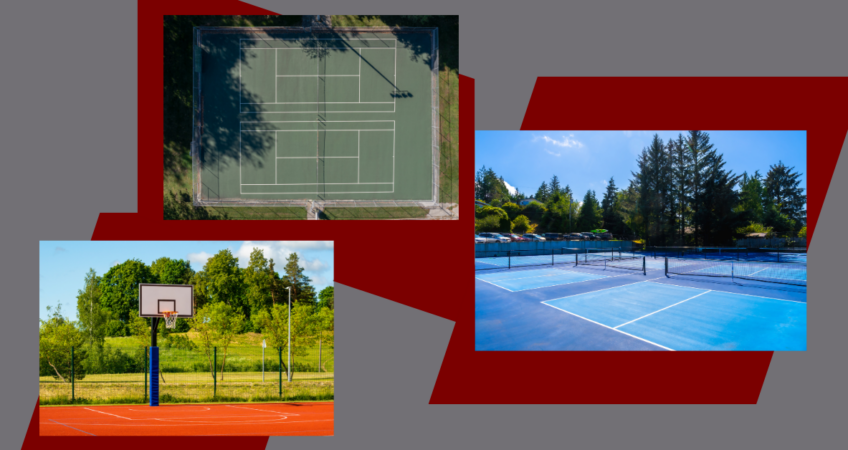
Hard-surfaced sports courts, whether for tennis, pickleball, or basketball, are exposed to the elements 365 days a year. Sun, rain, snow, wind, and repeated freeze-thaw cycles take a continuous toll on every component of these amenities. Without proper upkeep, environmental impacts accelerate rapidly.
Proactive, structured maintenance is the most effective way to limit environmental wear, safeguard residents, protect playing performance, and maximize useful life.
Why Proactive Maintenance Matters
Implementing solid maintenance practices directly impacts your association’s long-term budget and safety profile:
- Safety & Performance: Ignoring routine care allows minor surface defects to evolve into major trip and slip hazards. Mold and mildew can also form on untreated finishes, ruining traction.
- Asset Longevity: Courts designed to last 20 years or more can require total replacement in as little as 10 years if maintenance is deferred.
- Cost Control: Diligent care extends component useful life, allowing your reserve fund to grow as projected without premature capital calls.
Proper surface management and drainage align with broader environmental standards. For instance, the U.S. Environmental Protection Agency (EPA) highlights how managing surface runoff and maintaining paved areas prevents structural erosion and protects local watershed quality.
Core Maintenance Checklist
To keep your playing surface safe and durable, keep these core tasks top-of-mind:
- Keep courts clean: Dirt accelerates surface wear and finish deterioration while creating slip risks.
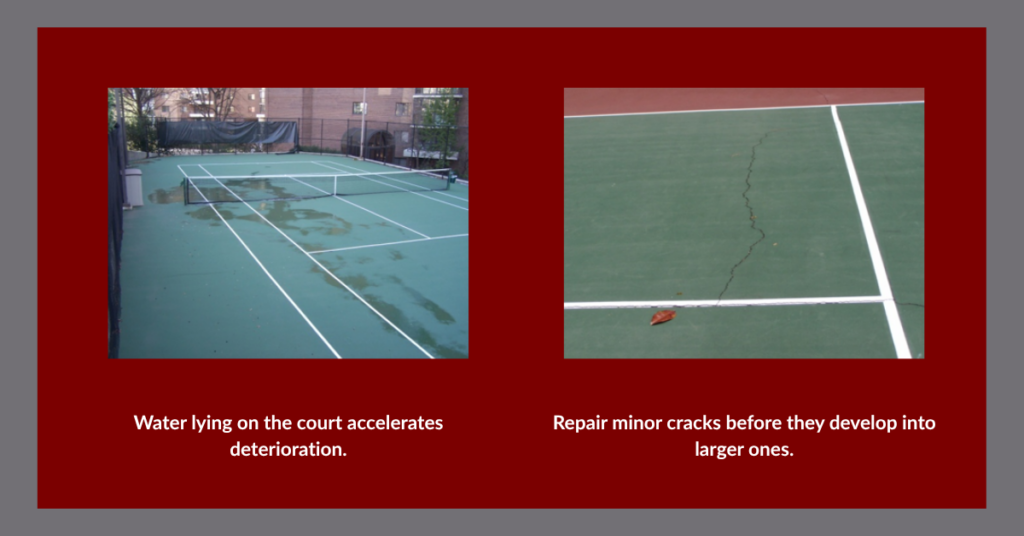
- Check drainage: Standing water that ponds on the surface will rapidly ruin asphalt and acrylic coatings.
- Repair cracks early: Patching minor cracks immediately limits moisture penetration into the underlying asphalt base.
- Trim surrounding vegetation: Overhanging trees and shrubs accelerate algae growth by blocking sunlight. Fallen branches can also damage fencing and asphalt.
- Inspect fencing: Loose or damaged chain link, gaps, unstable posts, or broken gates compromise security and player safety.
- Inspect and measure net height: Sagging or fraying nets directly impact playability and signal neglect.
- Inspect windscreens: Exposure to UV rays and wind leads to gradual tearing and hardware failure.
Establishing a Systematic Maintenance Schedule
The key to successful amenity management is consistency. Deferring routine tasks accelerates decay and triggers early structural failure.
Pro Tip: Maintain a detailed log of all completed maintenance. Over time, this record will reveal when ongoing repair costs outweigh benefits, signaling that it is time to plan for resurfacing or replacement in your Reserve Study.
Daily Tasks
- Walk the courts to inspect for fresh surface issues or hazards.
- Sweep or leaf-blow debris to prevent surface staining and organic buildup.
- Inspect for ponded water after rain events.
- Check posts, nets, gates, and locks for proper operation and damage.
Weekly Tasks
- Walk the perimeter fence line checking for loose fittings, damaged mesh, or rust.
- Verify proper net height.
- Inspect windscreens for torn edges, sagging, or loose fasteners.
- Inspect perimeter drainage inlets for blockages.
- Clean the surface using low-pressure water (never use a high-pressure washer, as it can strip the protective court finish).
Monthly Tasks
- Conduct a detailed visual inspection of the entire surface. Log cracks that are larger than 1/8 inch and note any peeling or worn finish.
- Trim back encroaching trees and shrubs to prevent physical damage and reduce algae growth.
- Test court lighting systems and operational timers.
- Inspect courtside benches and amenities for structural integrity.
Seasonal Upkeep
- Spring Preparation: Deep clean the surface using low-pressure water and a mild detergent. Seal small cracks and adjust/lubricate all security and gate hardware. If windscreens were left up over the winter, check them thoroughly for fabric degradation.
- Winter Protection: Even when unused during winter, clear snow promptly using a soft-edged shovel. Freeze-thaw cycles cause trapped snowmelt to refreeze, damaging the binder layer. Never apply chemical deicers or salt, as they break down acrylic coatings and aggregate.
Useful Life Expectations: When Maintenance Isn’t Enough
Even with pristine upkeep, every component reaches the end of its useful life. For reserve planning purposes, typical lifespan expectations include:
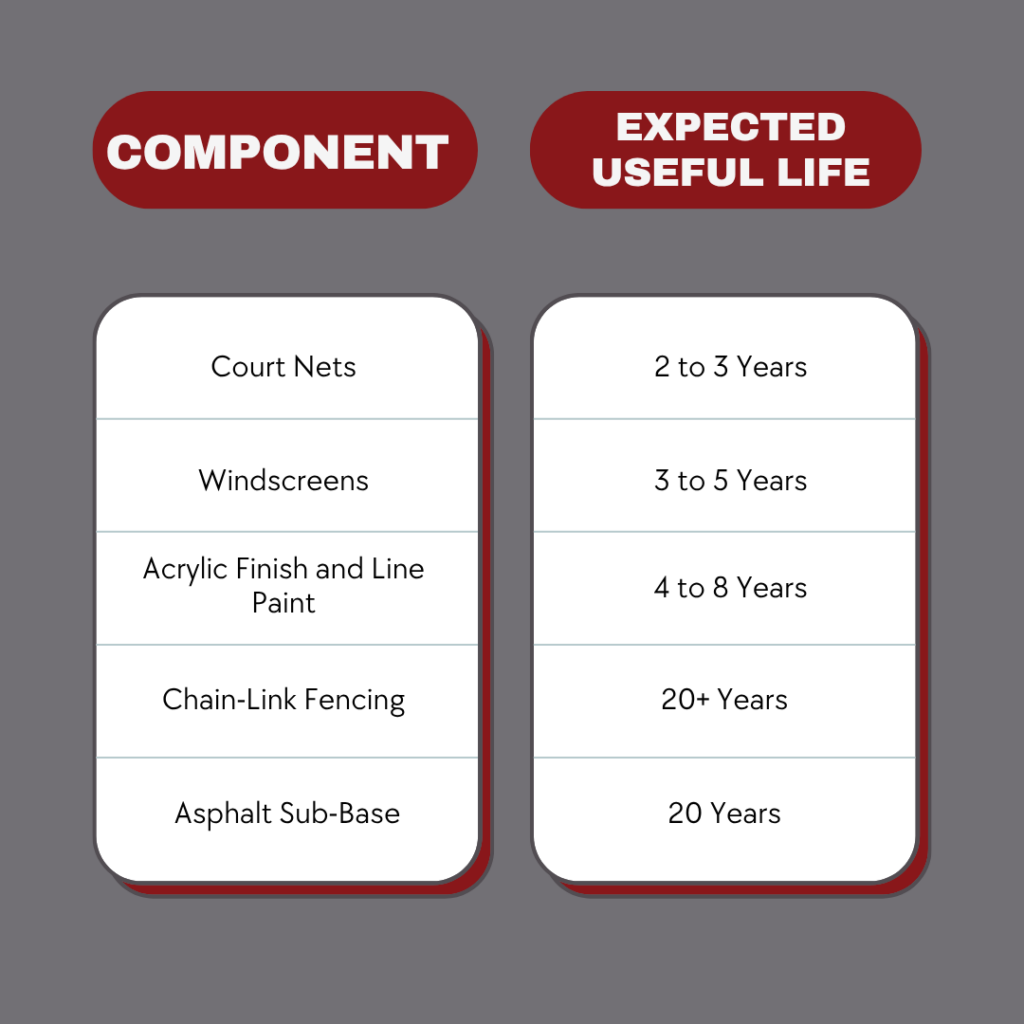
Eventually, every community reaches a threshold where annual patch repairs, recurring crack fills, and settlement fixes are no longer cost-effective. At that stage, complete demolition and replacement become necessary.
Plan Ahead for Major Capital Expenditures
Is your community prepared for the eventual resurfacing or total replacement of its sports courts? Accurate financial planning prevents surprise special assessments and keeps your amenities in peak condition.
Contact our expert team today to request a Reserve Study Proposal and ensure your community’s long-term physical and financial health.