
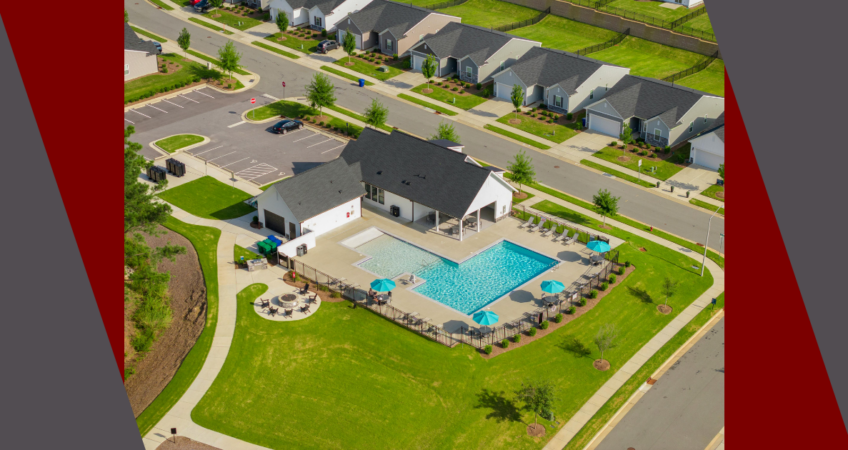
From the perspective of a reserve study, pools and clubhouses are among the most visible, and most expensive, assets an association owns. The water is only the start. Coping, tile, and furniture drive real capital costs that belong in the reserve plan, not the surprise-assessment column.
Ask most board members what their community pool costs, and they will point to chemicals, a seasonal maintenance contract, and maybe a pump replacement. Those items belong to the operating budget. The costs that threaten financial stability all arrive at once: a failed plaster finish, cracked coping that is no longer code-compliant, tile delaminating at the waterline, or clubhouse furniture that has quietly reached the end of its useful life.
A reserve study names those projects before they name themselves. Pools and clubhouses concentrate several short- and mid-life components into one high-visibility area. When they are underfunded, the association loses more than an amenity, it loses member confidence.
Why Pools Punch Above Their Weight in a Reserve Study
Pools are a complex system rather than a single line item. A typical installation includes:
- Shell and finish
- Waterline tile
- Coping and deck surface
- Circulation and filtration equipment
- Heaters and covers
- Fencing and safety barriers
- Outdoor and indoor furniture
- Adjacent spas or splash pads
Each component carries its own remaining useful life (RUL). Treating “the pool” as a single 30-year asset is how associations wake up to a six-figure capital project with a five-figure reserve balance.
Clubhouses compound this exposure. Members using the pool expect adjacent restrooms, locker rooms, kitchenettes, and gathering spaces to match in quality. Worn furniture, faded umbrellas, and chipped tile communicate deferred maintenance even when the underlying structure is sound. Prospective buyers, lenders, and assessment-paying owners notice immediately.
The Key Asset Categories
-
Coping: The Edge with Large Consequences
Coping is the cap at the water’s edge. It absorbs constant UV exposure, chemical splashes, freeze-thaw cycles, and heavy foot traffic. Typical materials, precast concrete, natural stone, or brick, rarely last as long as the pool shell.
When coping fails, the issue extends beyond cosmetics:
- Loose or heaved pieces create trip hazards and liability risks.
- Water penetrates behind the bond beam, causing structural degradation.
- Neglected coping can force a broader deck or tile reconstruction.
In a reserve study, coping is inventoried separately from the deck and interior finish. Remaining useful life is assigned based on observed field conditions rather than installation dates alone.
-
Tile: Waterline, Deck, and Wet Rooms
Tile systems span three distinct environments that require separate reserve planning:
- Waterline Tile: Attacked by water chemistry, scale build-up, and expansion.
- Deck Tile: Fails due to ground movement, drainage issues, and freeze-thaw cycles.
- Clubhouse Wet Areas: Fails from grout breakdown and moisture intrusion in showers, locker rooms, and restrooms.
Replacement cost is rarely “just tile.” Project scope typically includes demolition, waterproofing membranes, setting beds, and matching discontinued materials. Reserve studies use current full-replacement costs rather than original bid estimates. Optional aesthetic upgrades should be funded as capital improvements, separate from baseline reserve coverage.
-
Furniture: The Amenity Members Judge First
Pool and clubhouse furniture is the component most frequently omitted from reserve inventories. Commercial-grade chaises, tables, umbrellas, lounge seating, and outdoor kitchens do not last 25 years.
High-use communities typically experience a 7- to 12-year lifecycle for commercial furniture frames, with fabric and straps requiring attention even sooner. Leaving furniture in the operating budget often forces a choice between raiding reserves allocated for roofing or levying a special assessment for lounge chairs. A complete reserve study establishes a scheduled replacement allowance based on quantity and quality grade.
What a Complete Amenity Inventory Includes
A comprehensive physical analysis separates pool and clubhouse components into discrete line items:
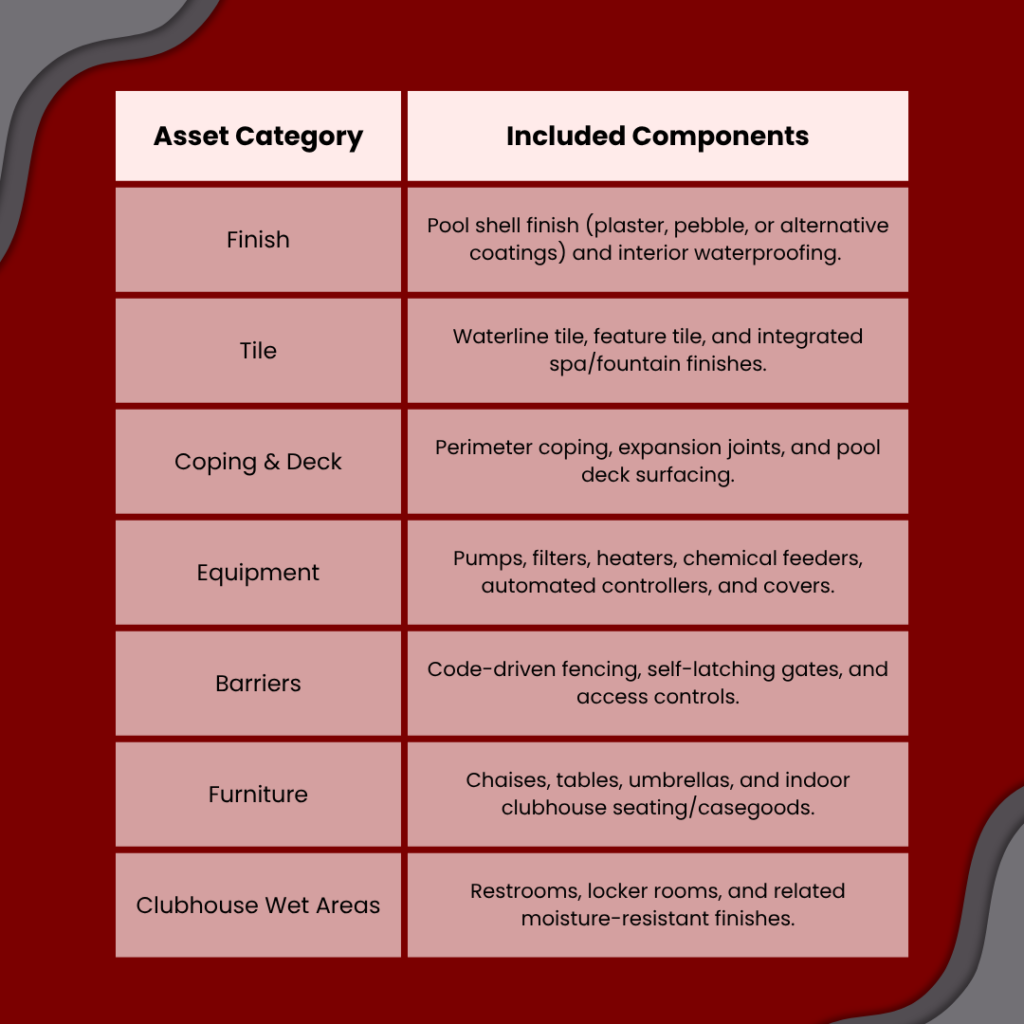
Each item is assigned to a useful life, remaining useful life, and current replacement cost to calculate a long-term funding plan.
Regulatory Guidance & Practical Budgeting Rules
Safety and Operations vs. Capital Planning
Healthy, well-maintained pools protect both residents and association finances. The Centers for Disease Control and Prevention (CDC) maintains the Model Aquatic Health Code (MAHC) as guidance for public aquatic venues, covering facility design, operation, and injury prevention. Local health codes and operational standards dictate day-to-day requirements, while the reserve study ensures capital is available when code-driven replacements occur.
Best Practices for Boards
- Unbundle the Asset: Avoid folding the facility into a single “recreation” budget line. Separate the finish, tile, coping, equipment, and furniture.
- Update RUL via Field Inspection: Document physical condition during every study cycle. Coping and tile deteriorate faster than structural roofing.
- Use Commercial Unit Costs: Base estimates on commercial-grade materials rather than residential retail options.
- Separate Baseline Reserves from Upgrades: Reserve funds should cover like-for-like replacement. Incremental costs for upgrades (e.g., converting them to a salt system or premium finish) belong in a separate capital improvement fund.
- Sequence Major Projects: Align pool surface repairs with clubhouse wet-area renovations to consolidate closures into a single season.
The Risk of Deferred Maintenance
Underfunded aquatic assets rarely fail in isolation:
- A plaster repair delayed by two years often expands into a full plaster, tile, and coping overhaul.
- Deferred furniture replacement leads to immediate member complaints at annual meetings.
- Patched wet-room tiles can conceal moisture damage within surrounding walls.
Reserve studies make these timelines visible, allowing boards to make incremental monthly contribution adjustments rather than sudden special assessments.