
Building mechanical systems are the heartbeat of any community, yet they don’t last forever. Eventually, every piece of equipment reaches a crossroads: it either fails or becomes a “money pit” that is too costly to maintain.
When these systems fail unexpectedly, community boards face more than just hefty replacement bills; they face major operational disruptions and frustrated residents. However, equipment service lives are not set in stone. By understanding industry standards and the factors that influence longevity, boards can transition from reactive repairs to proactive planning.
What is “Estimated Service Life”?
The Estimated Service Life (ESL) is the period a system is expected to operate before requiring major overhauls or total replacement. This figure assumes the equipment was installed correctly, operated under normal conditions, and—most importantly—properly maintained.
Knowing the ESL is a powerful planning tool. As equipment ages, the frequency of breakdowns inevitably increases. If a unit is nearing the end of its projected lifespan and needs a significant overhaul, investing in a replacement is often the more financially sound decision.
Factors That Impact How Long Equipment Actually Lasts
Service life numbers are averages, not guarantees. Several variables can accelerate or extend the life of your machinery:
- Installation Quality: Higher initial costs often correlate with better build quality and longer lifespans.
- Proper Sizing: Undersized equipment works harder to meet demand, leading to premature stress and failure.
- Usage Patterns: While high-frequency use wears parts down, equipment that sits idle for too long can also suffer from corrosion and seal failures.
- Climate: Extreme temperatures and high humidity accelerate the deterioration of sensitive mechanical components.
- Maintenance: This is the “silver bullet” for longevity. Neglecting routine service can slash a system’s life expectancy by 50% or more.
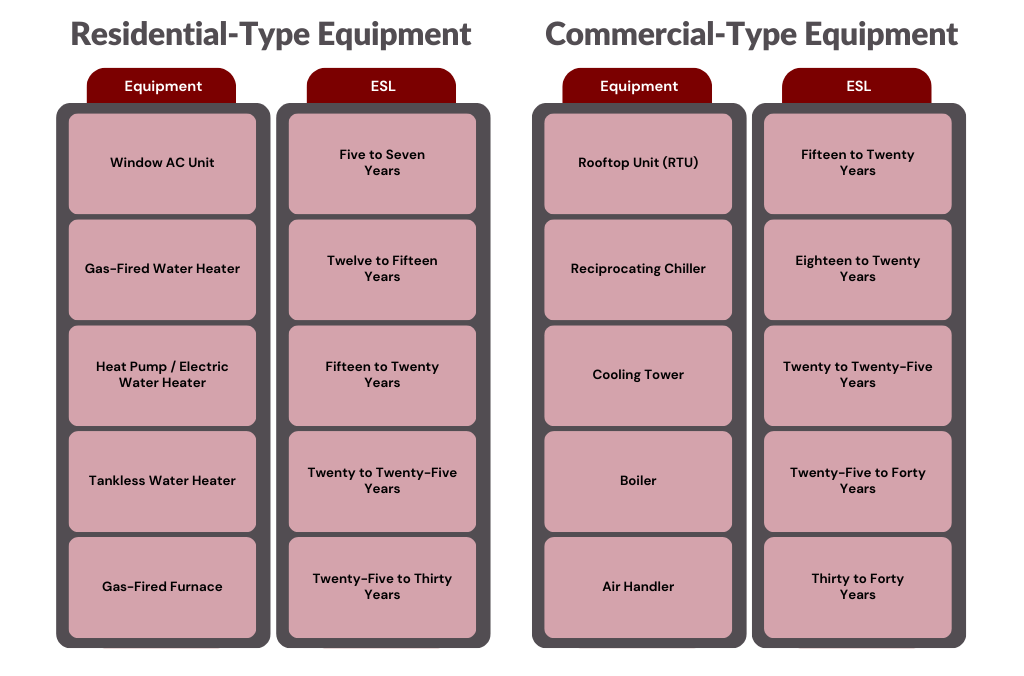
Industry Standard Lifespans: At a Glance
Whether your community consists of garden-style condos or high-rise luxury units, these general guideline examples can help in forecasting your next move.
The Big Question: Repair vs. Replace?
It is a natural instinct to keep repairing a unit to avoid the capital outlay of a replacement. However, at a certain point, the “band-aid” approach fails. Consider these five factors:
- Maintenance History: Are repairs becoming more frequent and severe?
- Parts Availability: If the manufacturer no longer stocks components, replacement may be your only choice.
- Lead Times: Large systems like chillers can have long delivery windows. Don’t wait for a total failure to start the process.
- Strategic Timing: It may be wiser to perform a temporary repair to get through a peak season (like mid-summer) and schedule a full replacement during the off-season.
- Energy Efficiency: Modern units are significantly more efficient than those from 20 years ago. The energy savings alone can often help offset the replacement cost.
Plan Ahead with a Professional Reserve Study
The best way to avoid the “emergency replacement” trap is through a comprehensive Reserve Study. By tracking the age and condition of your mechanical assets, you can reserve funds over several years, ensuring that when the time comes to replace a boiler or a cooling tower, the money is already in the bank.
Is your community prepared for the next major mechanical replacement?
Let us help you take the guesswork out of your capital planning. Visit here to submit a proposal request and ensure your community’s infrastructure, and finances, remain on solid ground.